A Dialogue Between History and the Future
The 201 Brookline Avenue project marks a pivotal moment in the evolution of Boston’s historic Fenway neighborhood. As the second phase of the Landmark Center redevelopment, this 14-story laboratory and office tower rises, creating a powerful dialogue between the past and future.
One of the space’s anchor tenant, the Wyss Institute for Biologically Inspired Engineering at Harvard University, was in need of acoustic mitigation and turned to Arktura to create a unified environment purpose-built for discovery.
Design Vision: Engineering an Atmosphere of Discovery
The project’s vision was to create more than just a building; it was to cultivate an atmosphere. For the pioneering researchers at the Wyss Institute, this meant designing a space that was not only functional but also inspiring and acoustically controlled. The design intent was to establish a seamless visual language that would flow through the building’s diverse spaces, from high-tech labs to collaborative breakrooms.
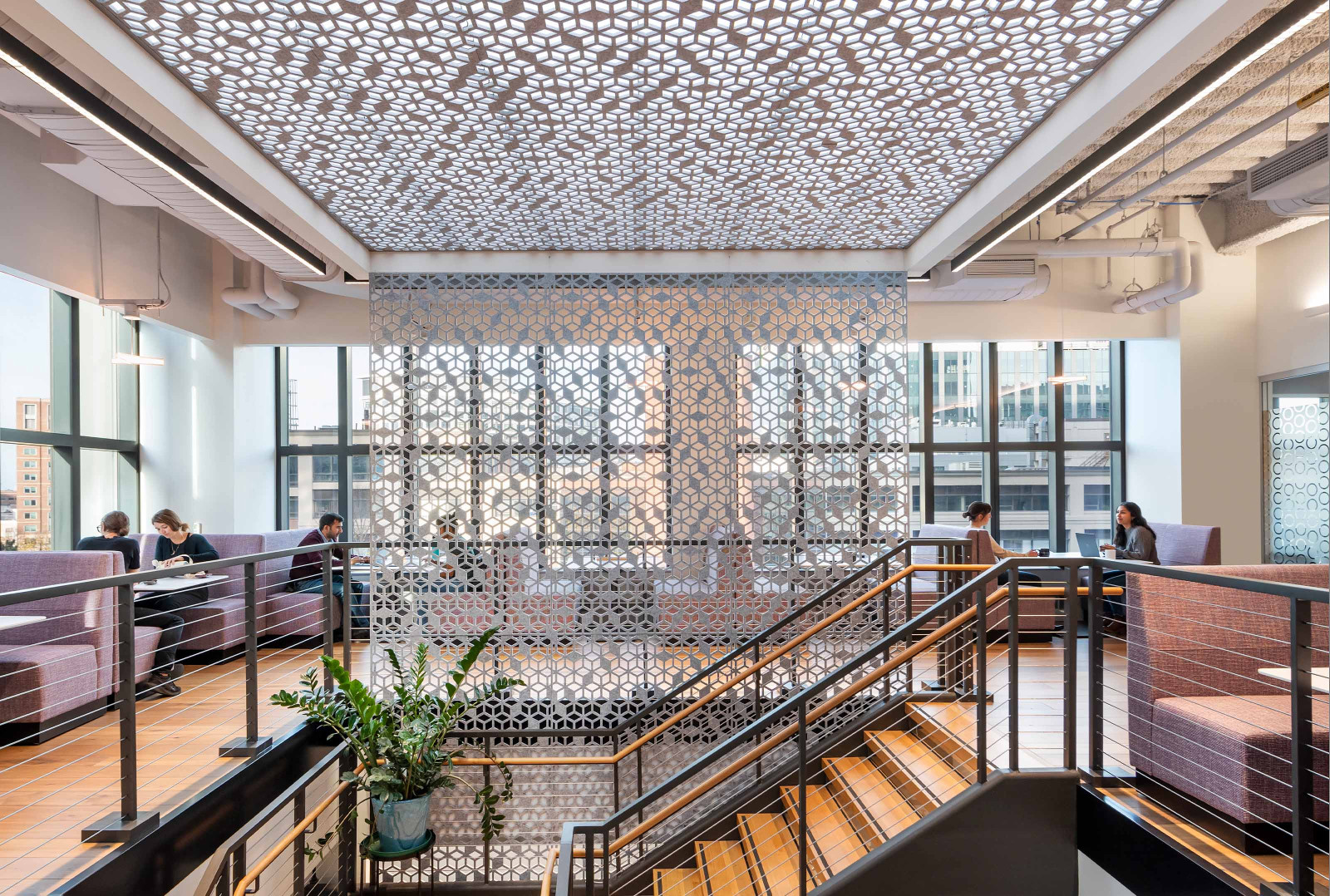
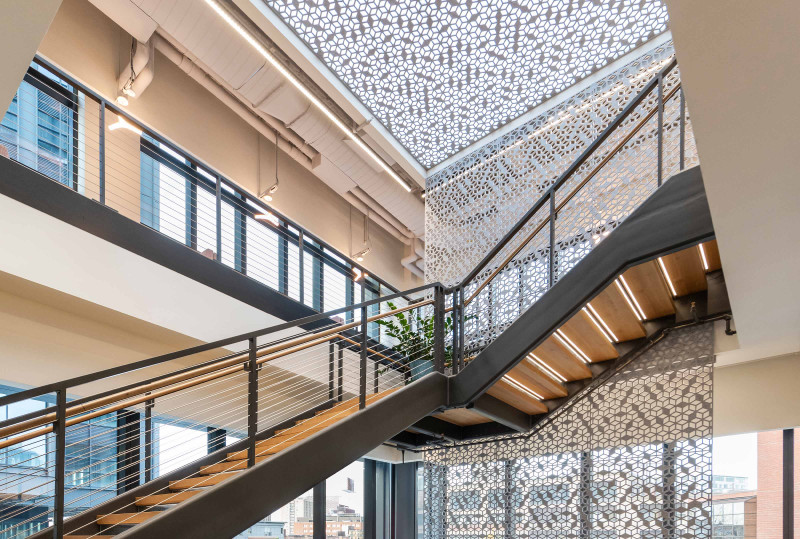
This unified aesthetic was achieved through a consistent geometric pattern, “Cora,” deployed across different materials and applications. The design’s most dramatic expression is a two-story acoustic partition. This feature wall, begins as an illuminated VaporSoft® Cora ceiling panels on the top floor and cascades vertically down a central staircase, transforming from a ceiling into a dynamic SoftScreen® Cora. This signature installation provides a visual and acoustic connection between floors, becoming a central artery of the building’s design.
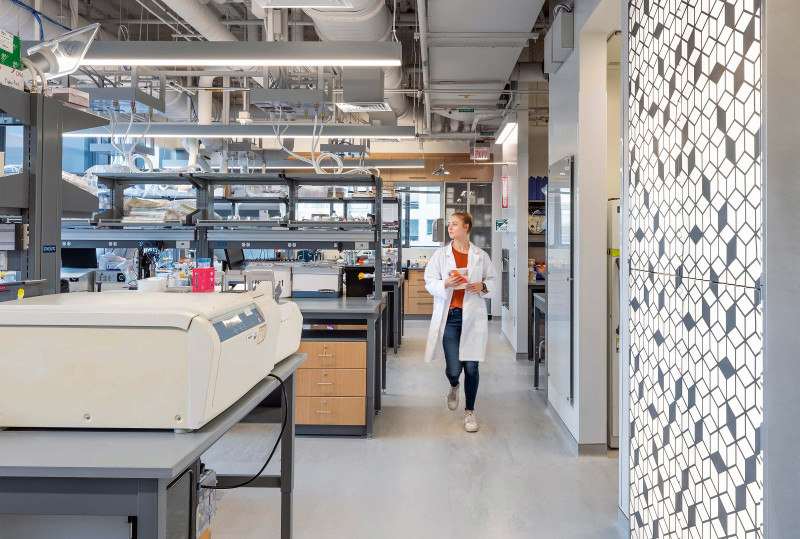
The geometric motif extends throughout the facility, demonstrating both aesthetic cohesion and functional artistry. In the state-of-the-art research laboratories, the pattern appears in durable Vapor® Cora wall panels. In the employee breakroom, the same geometry is reimagined as twisting SoftFold® acoustic baffles, creating a visually intriguing space that balances acoustic comfort with an elevated design.
Challenge: From Soft Material to Sculptural Wall
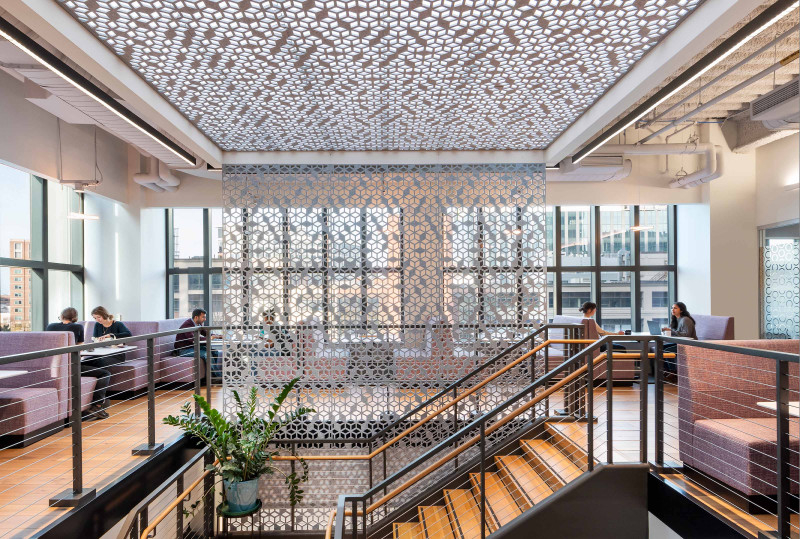
The primary technical challenge lay in executing the monumental two-story feature wall. The design called for a taut, seamless, and visually solid screen, but the specified Soft Sound® acoustic material is inherently soft and flexible. The hurdle was monumental: how to engineer a rigid and reliable structural system from a pliable material, ensuring it met the highest aesthetic standards while providing its required acoustic performance.
Solution: Collaborative Engineering and Expert Execution
Overcoming this challenge required a deeply collaborative approach. The project’s success hinged on the synergy between our internal engineering and product development teams (Arktura’s Solutions Studio®) and the partner structural engineers.
By referencing proven strategies from past projects involving tensioned acoustic systems, our teams adapted and refined previous solutions for the unique demands of the Wyss Institute. Through meticulous planning, prototyping, and close communication, a robust framework was designed to hold the flexible material in perfect tension.
Result: An Environment Forged for Innovation
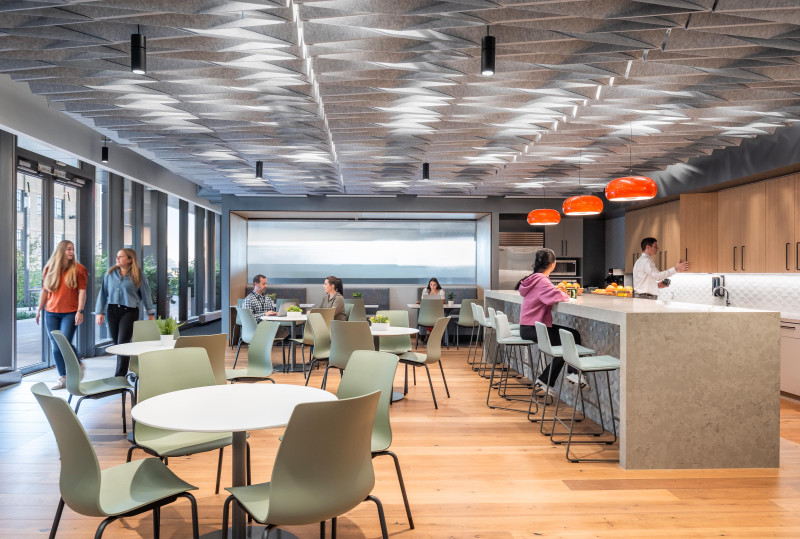
The interior environment successfully mirrors the pioneering work of its inhabitants. The cohesive design language and advanced acoustic control create a space that is not only visually striking but also optimized for the focus and collaboration that scientific breakthroughs require.
Ultimately, the successful fusion of design intent, innovative problem-solving, and expert execution exemplifies the power of collaboration. The result is a harmonious blend of historical reverence and forward-thinking design that elevates the Fenway neighborhood and provides a worthy home for the next generation of scientific discovery.